
YEAR:
2024 – 2026
LOCATION:
Sanlitun Taikoo Li
Beijing, China
STATUS:
BUILT
About the Project
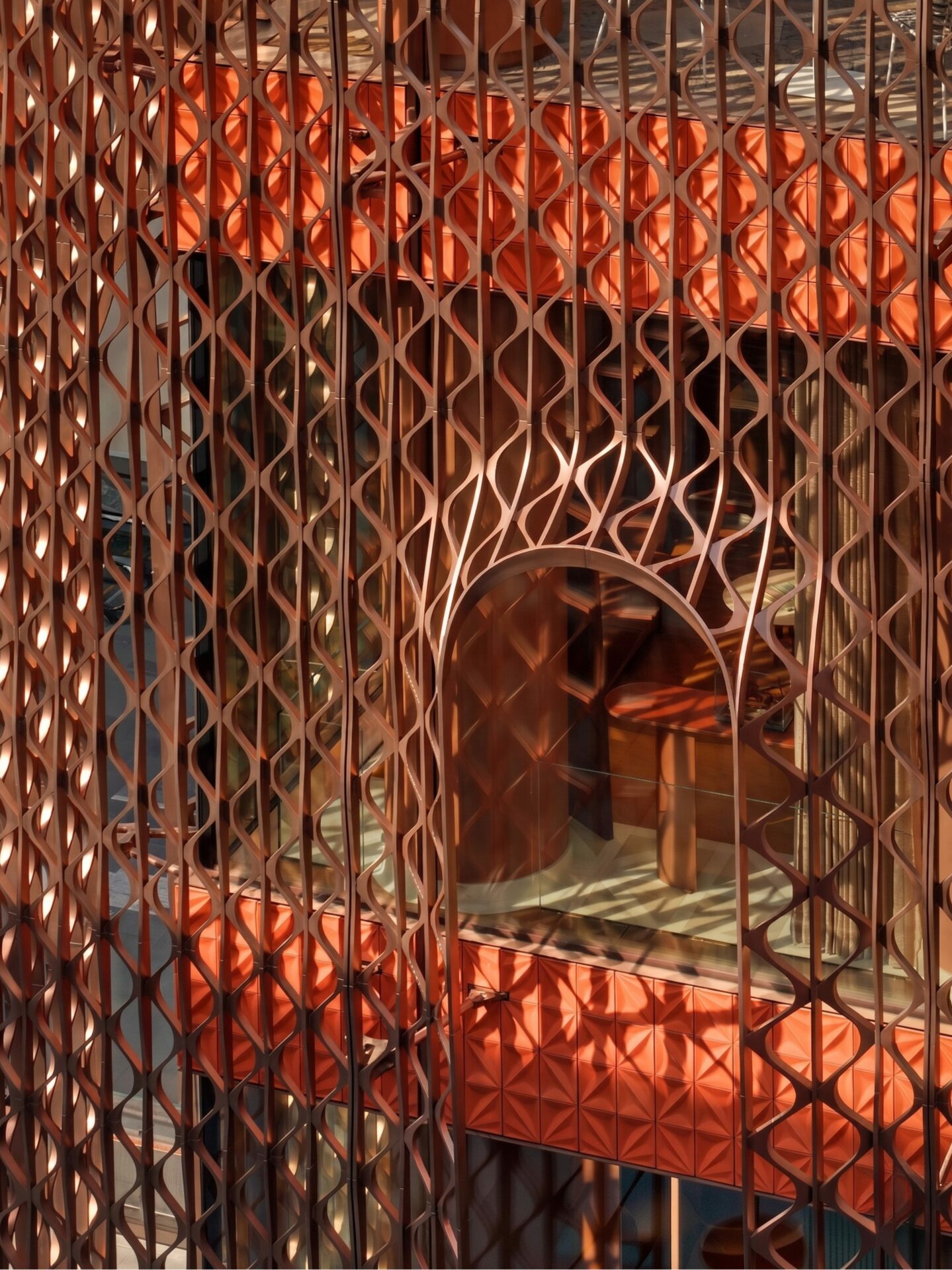
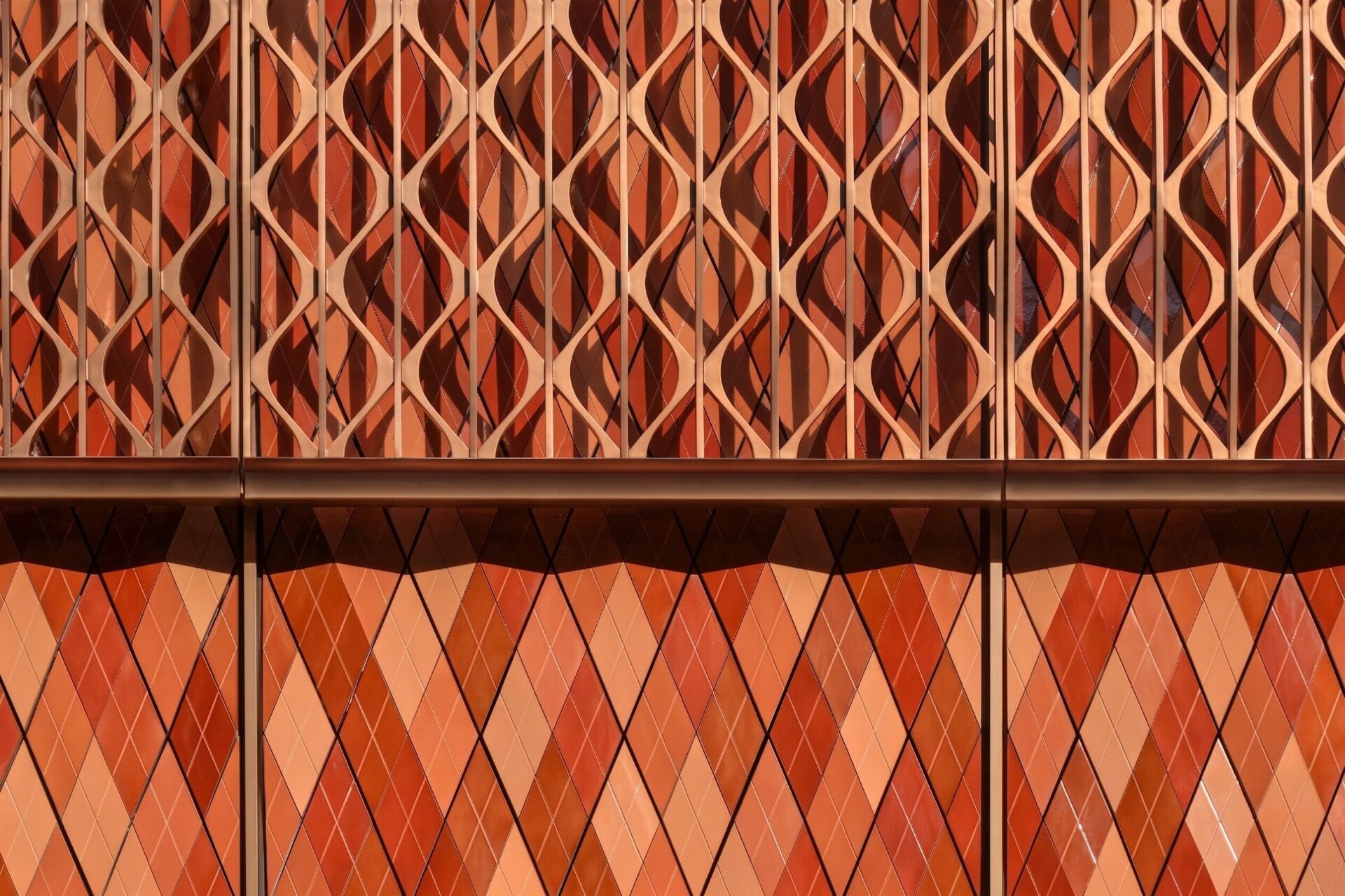
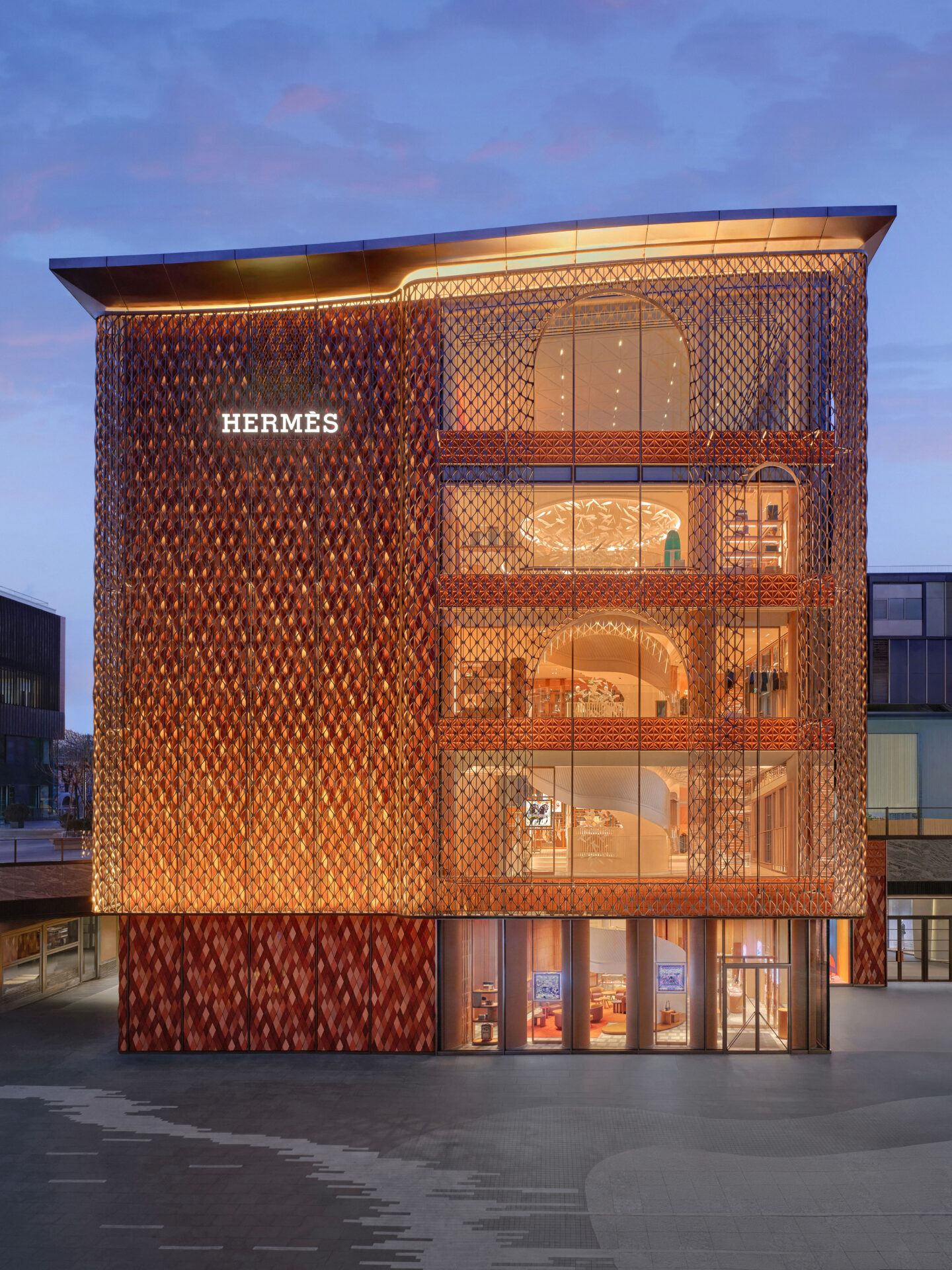
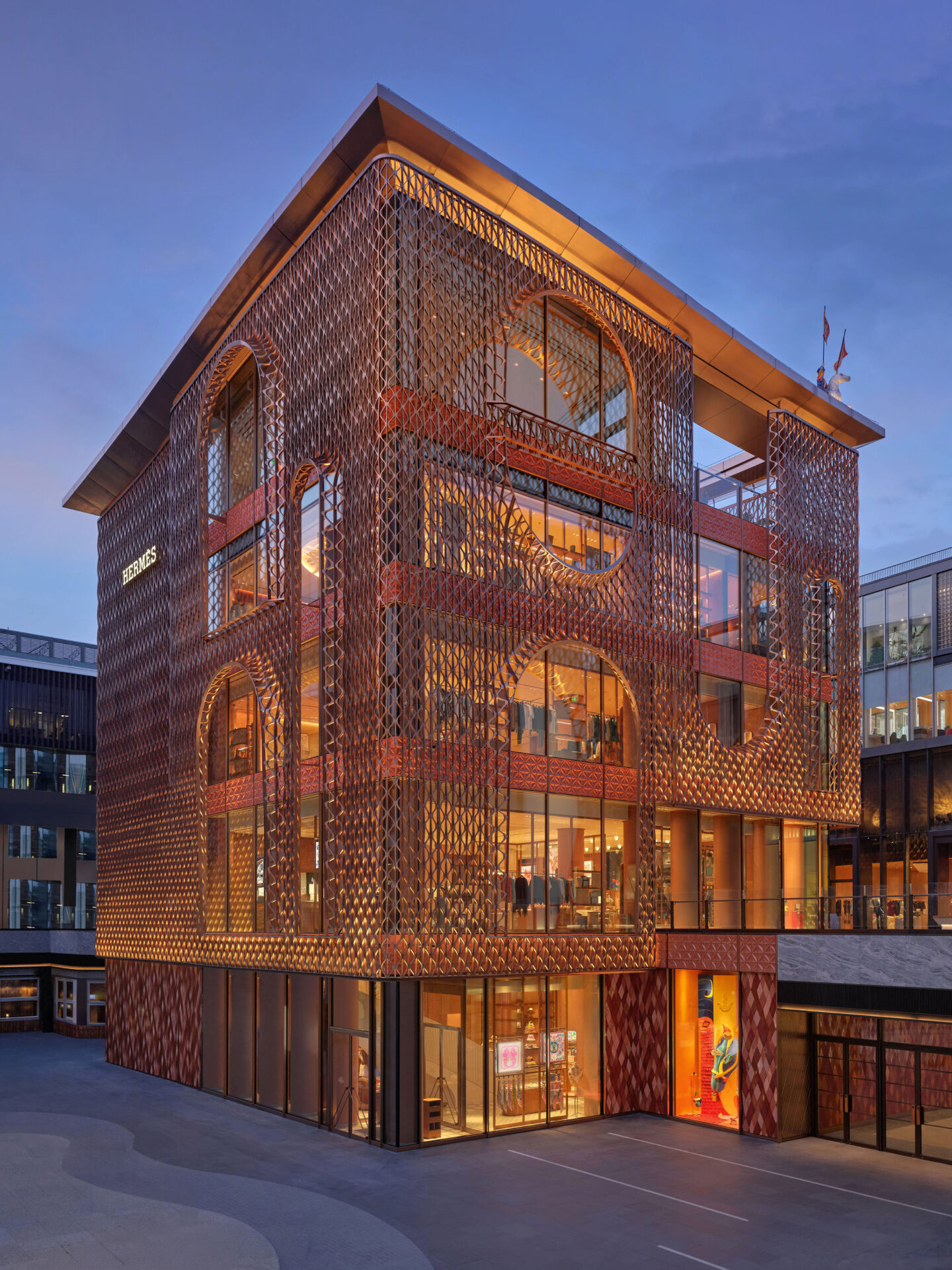
Hermès unveils its flagship store designed by Parisian architecture firm RDAI, at Sanlitun Taikoo Li, a five-storey glass building wrapped in rose-pink and terracotta ceramic tiles.
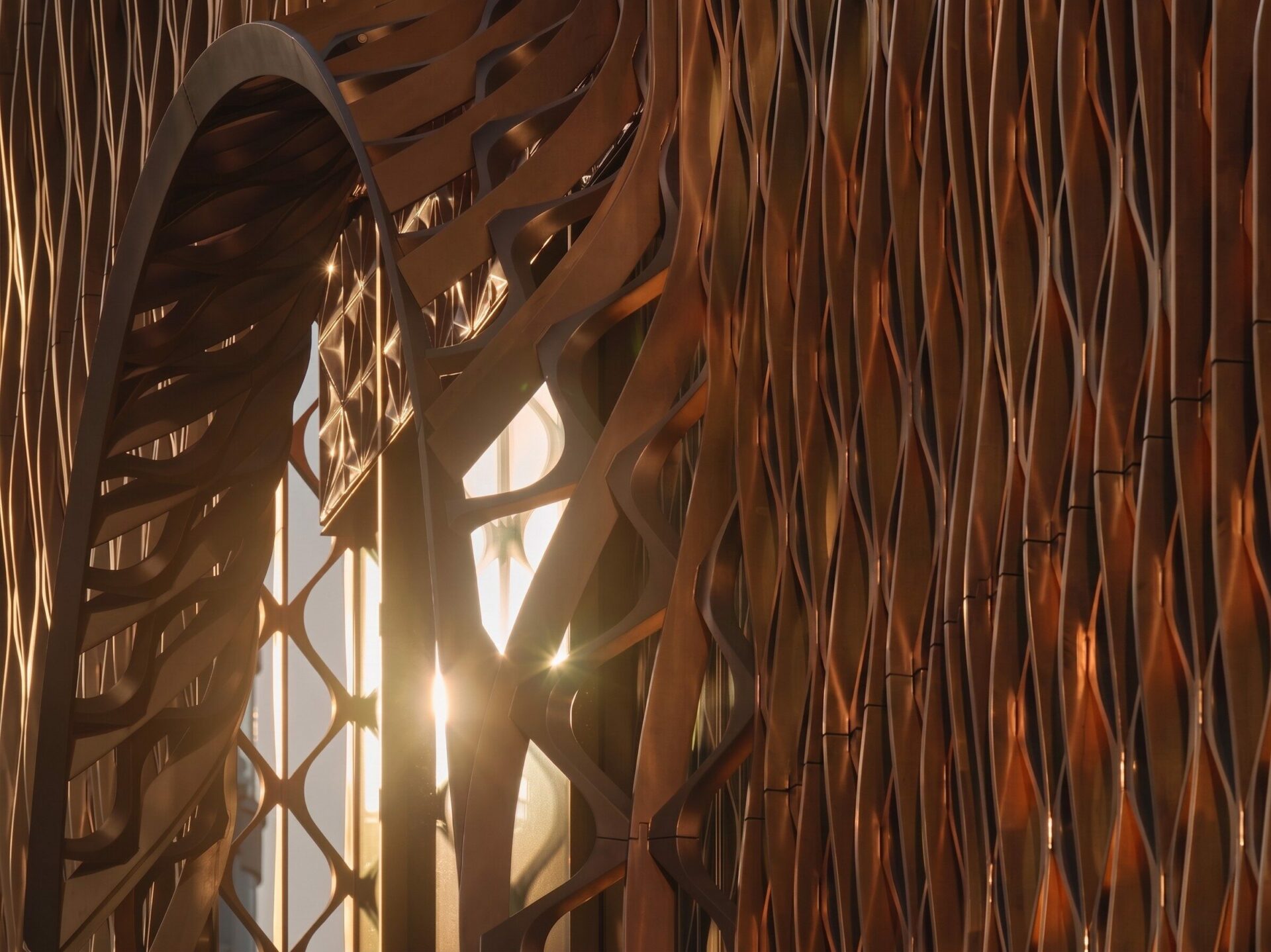
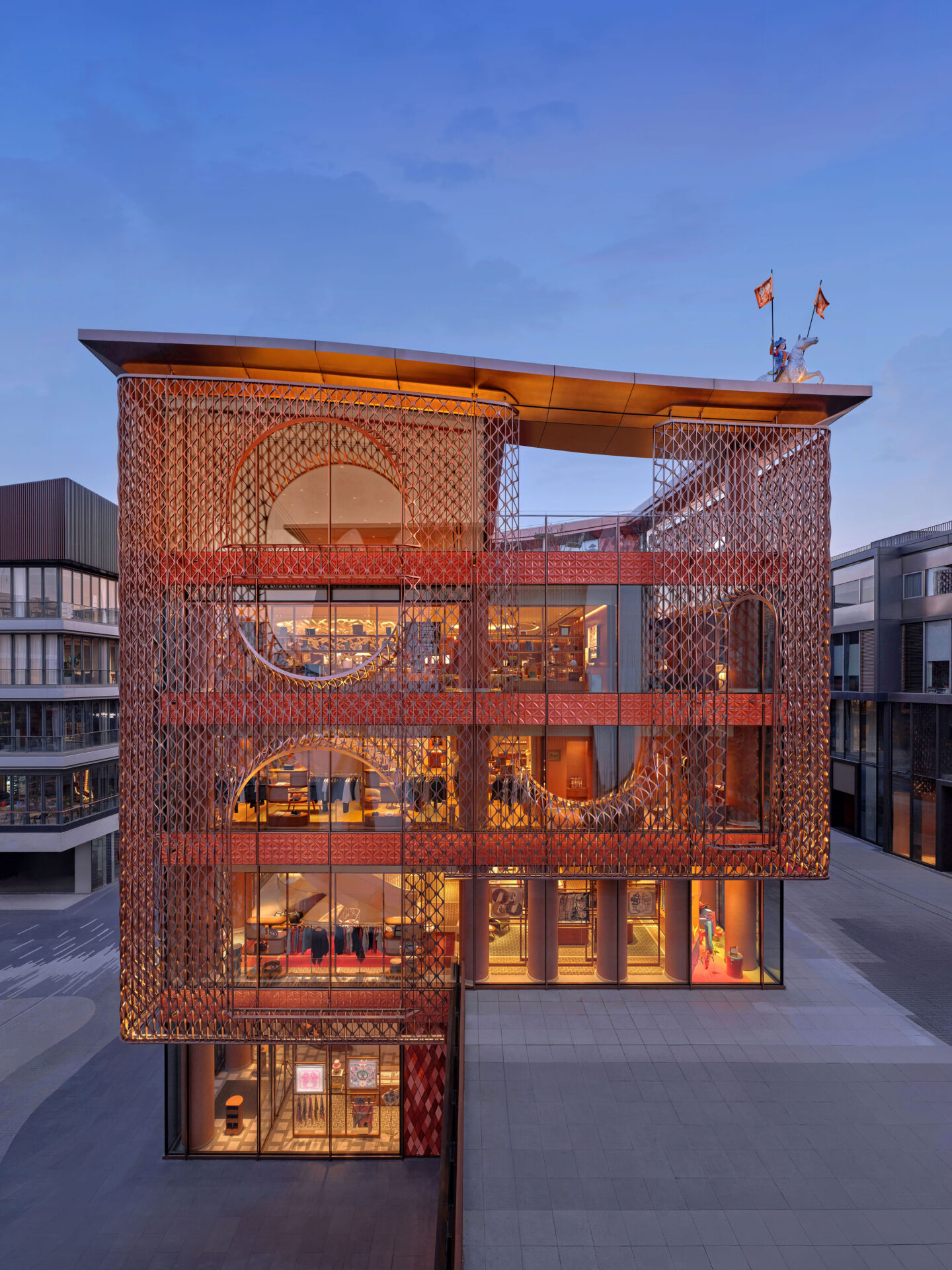
The façade, designed by RDAI in collaboration with Mamou-Mani Architects, functions as a semi-transparent veil, composed in a rhythmic sequence that balances opacity and openness, allowing the interiors to be bathed in natural light.
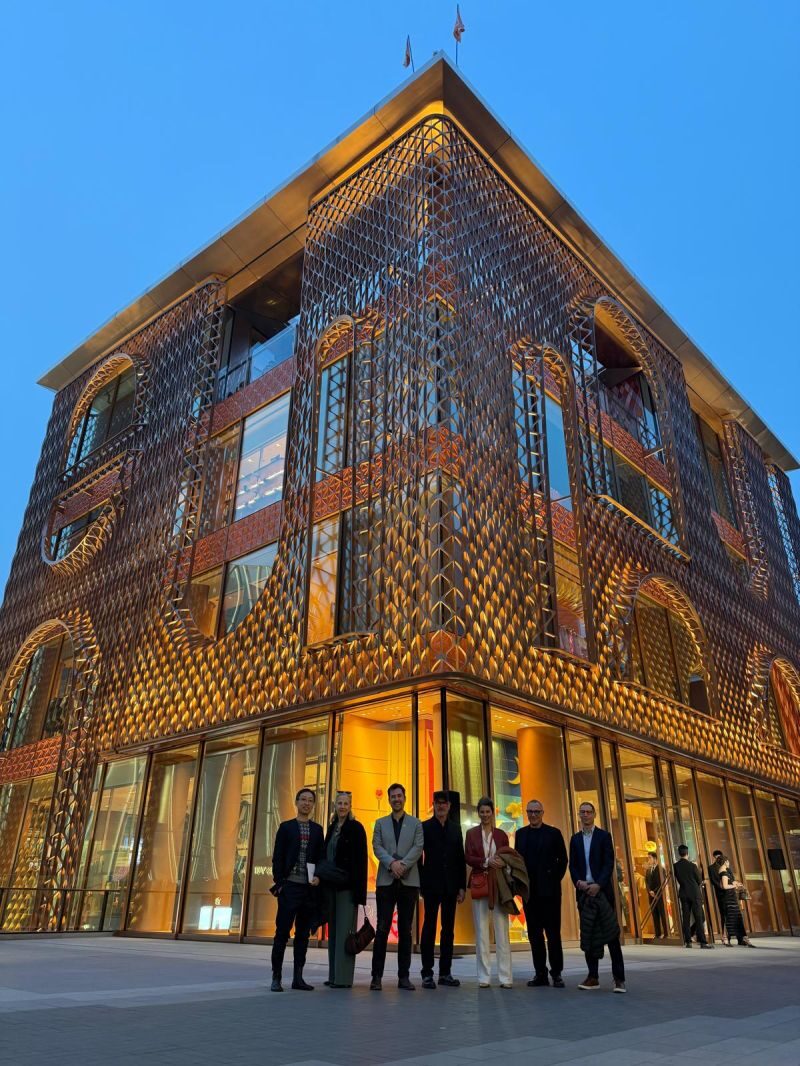


“It was a true honour to work on the facade alongside RDAI and Hermès in a collaborative spirit, finding a balance between organic geometry and the refined order and craft that define Hermès.”
– Arthur Mamou-Mani
The result is a façade that brings together structure, variation and lightness, rooted in its context.
Arthur Mamou-Mani met RDAI through The Collectif, an initiative that brings together design and making, valuing each craft equally.
The façade was developed in that spirit, through close collaboration between design, engineering and fabrication teams, with each informing the other from the outset.
The project grew through a series of iterations, shaped by constant dialogue. From an initial ceramic language to a more open metal lattice, the façade emerged gradually, each step responding to the last.
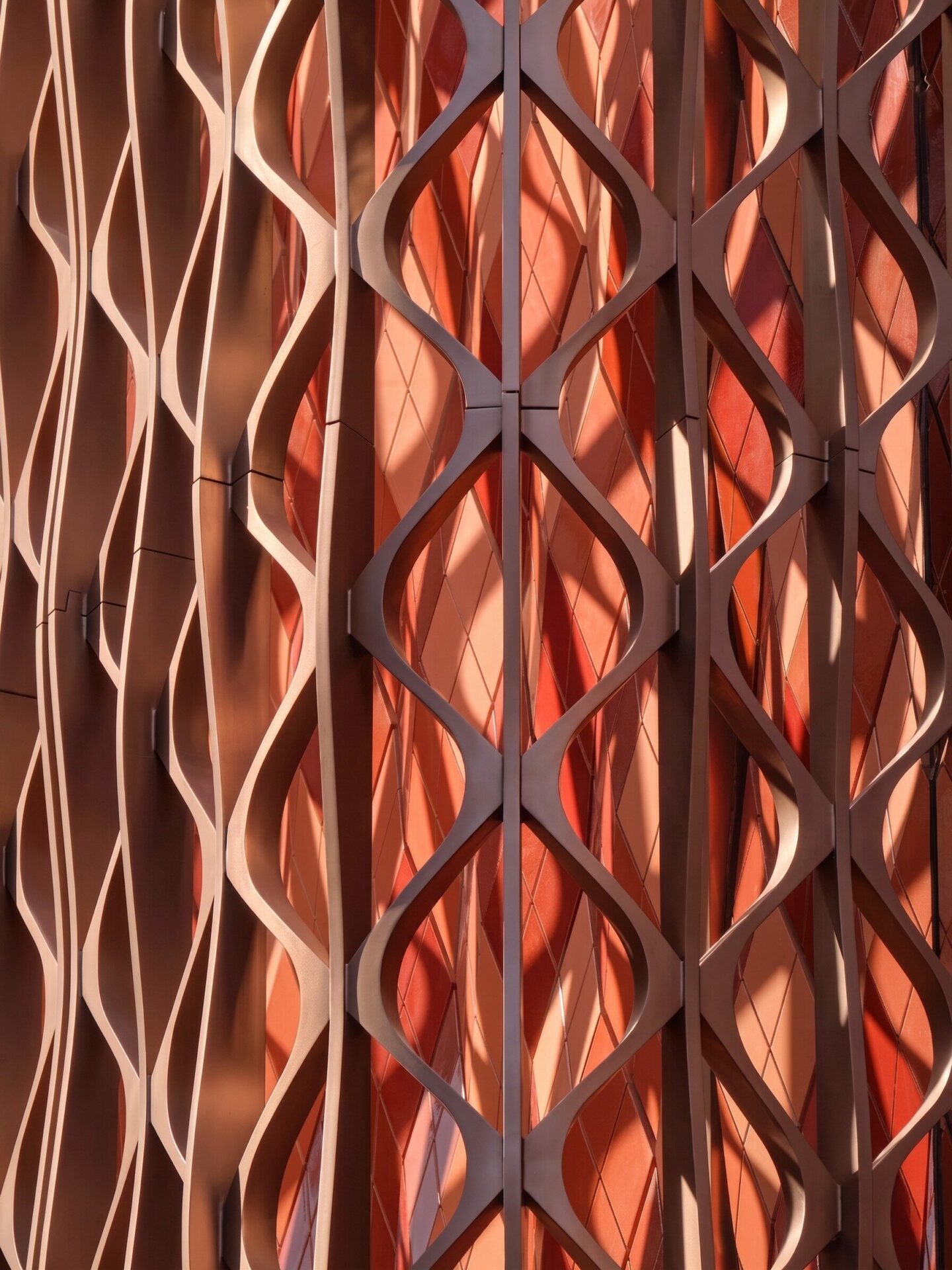
The system is conceived as a series of modular components, allowing for repetition, variation and efficient assembly. Panels are designed to be removable, enabling maintenance, repair and future reuse.
For the more complex, non-repetitive elements, 3D printed positives were used to produce moulds, allowing curved geometries to be fabricated with precision while remaining adaptable within the wider system.
Material and fabrication were considered together throughout, ensuring the lattice remains lightweight while meeting structural and environmental requirements.
The Concept
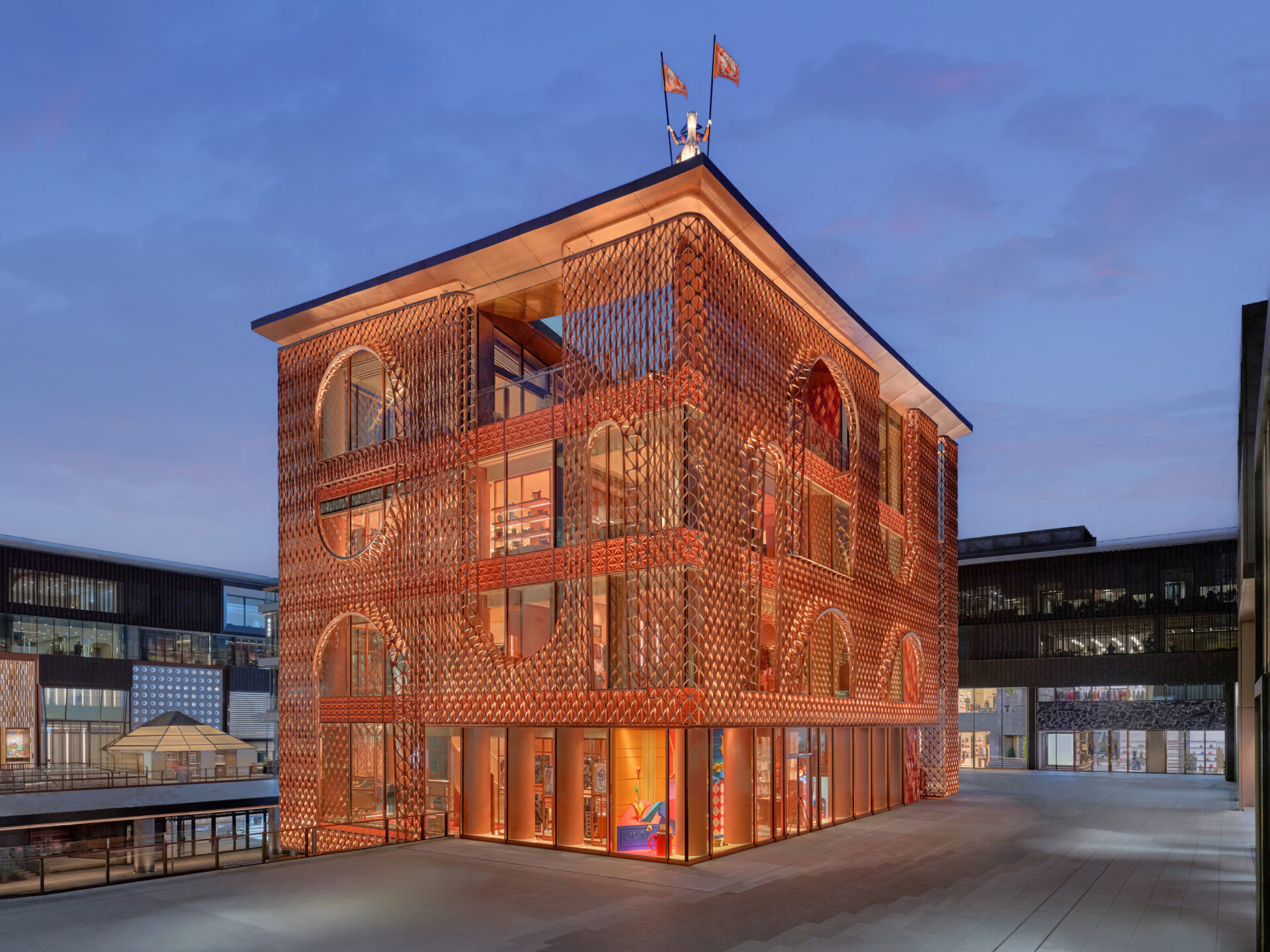
The arches in the façade form part of the composition, continuing a tradition present across Hermès stores. Arranged playfully, they open the mesh through a series of push and pull gestures, introducing a layered rhythm of depth, light and transparency.
Through a parametric design approach, these gestures extend into a modular system where a set of rules allows for variation while maintaining lightness and freedom.
Within this system, elements are shaped through a series of adjustments, using push, pull and mirrored operations, allowing each to respond to its position while maintaining overall coherence, forming a protective skin that filters direct sunlight and reduces heat within the space.
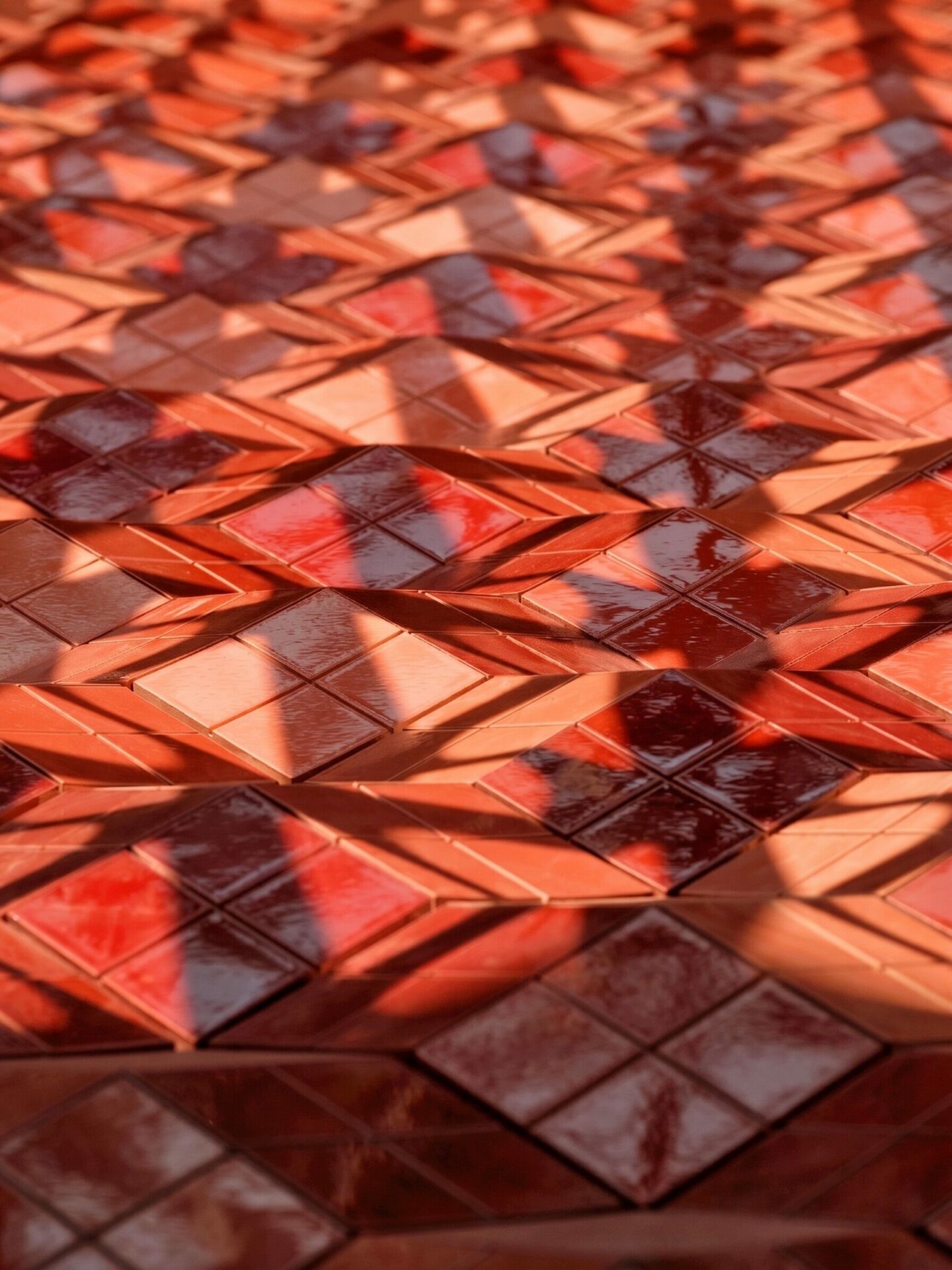
As the system extends, layers of ceramic nosing in diamond and rhombic geometries are introduced, drawing on Beijing’s ceramic tiling traditions and working in dialogue with the mesh to deepen the façade. It remains legible from a distance, shifting with movement to reveal finer layers of detail and curvature.
This language continues in the roof, which takes the form of a flowing surface inspired by the glazed roofs of the Forbidden City, gently shaping the building while maintaining a sense of lightness and continuity. The façade takes the form of a refined lattice, shaped with careful attention to texture and detail.
Press & Publications
The Hermès Sanlitun flagship façade has been featured by international architecture, design and fashion publications.
- WWD – Fulfilling the Late Jean-Louis Dumas’ Dream, Hermès Unveils First Stand-Alone Store in Beijing
- Hypebeast – Hermès Unveils First Stand-Alone Store in Beijing
- Parametric Architecture – Hermès Opens Beijing Sanlitun Flagship Defined by a Layered Ceramic Façade
- Superfuture – Beijing: Hermès Flagship Store Opening
- Shop Drop Daily – A Veil of Rose and Russet
TEAM
Client: Hermès
Architects for the building and interior: RDAI
Architects for the facade: RDAI in collaboration with Mamou-Mani Architects
Executive Architects: Atelier Pacific
Façade Engineering: RFR
Lighting Design: PHA concepteur lumière et design
Photography © Jonathan Leijonhufvud